
Peasants to Puddles
My Family History - By Nicky Rowberry
William Stevenson - Leading Stoker 215529
This page is dedicated to the memory of William Stevenson who died on 5th June 1916.
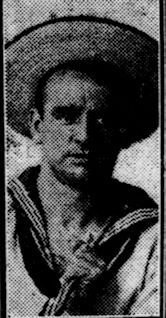
William Stevenson died on 5th June 1916 when his ship, the HMS Hampshire hit a mine off the coast of Orkney. He was unfortunately one of the casualties amongst the millions of men who lost their lives in World War 1. It seemed sad for him to have died and all but these bare facts remembered, so I've tried to find out at least a little about his life before his untimely death aged just 31.
William Stevenson was born on 5th May 1885 at 40 Wycliff Street in Basford, Nottinghamshire. He was the 3rd of 9 children of Martin Stevenson and his wife Kate (or Catherine) Shaw. His father Martin was an engine fitter or mechanic. By 1891 the family were still living in Wycliff Street and William was at school aged 6. His maternal grandparents lived next door, which must have been a big help to his mother with 9 children. In 1901 the family were living at 25 Osberton Street, Basford. Martin was now working as a fitter on lace machines and William was now working, aged 16, as a cotton winder for lace.
William joined the navy on his 18th birthday on 5th May 1903. He signed on for 12 years, but of course by the time his 12 years were up, the war had started. His service records from the time describe him as 5 feet 5, with auburn hair, grey eyes, a fresh complexion and a lily tattooed on his left forearm. I've not found him on the 1911 census, presumably he was away at sea by then. His parents and younger siblings in 1911 were still living in Osberton Street and his father was described as a lace machine mechanic.
William served on multiple ships during his time with the navy - HMS Prince George, Majestic, Glory and many more. His conduct was generally described as good or very good, although there were the occasional days in cells - the records don't say what for. It couldn't have been too bad as he was promoted to Lead Stoker. His penultimate ship was HMS Minotaur which he joined in June 1912. The Minotaur was an armoured cruiser and during William's time on it, was stationed in the China seas. At the outbreak of war the Minotaur went first to New Zealand, then the Cape of Good Hope, before being ordered home in December 1914. William remained with the Minotaur until May 1915, when he was transferred to HMS Hampshire.
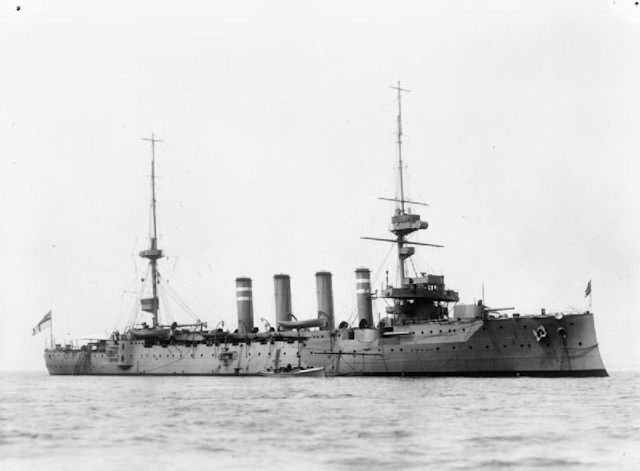
HMS Hampshire was also an armoured cruiser and took part on the Battle of Jutland in 1916, William being on the ship at this time. It must have been a dreadful time for William, as he would just have heard of the death of his father Martin Stevenson in April 1916. At the beginning of June 1916, the Hampshire was ordered to take Lord Kitchener from Scapa Flow in Orkney on a mission to Russia. Kitchener was the Secretary of State for War and as such a key figure for the British.

The ship was due to sail from Scapa Flow through the Pentland Firth. As the weather was bad, no enemy submarines were expected to be active, so the Hampshire sailed without escort. About 1.5 miles from the mainland of Orkney, she struck a mine that had been laid by a German submarine. It took only 15 minutes for the ship to sink. The heavy seas smashed most of the lifeboats. Of the nearly 750 men aboard, only 12 crew survived. Both William Stevenson and Lord Kitchener were amongst those lost.
The Commonwealth War Graves Commission website confirms that he was a Leading Stoker for the Royal Navy on HMS Hampshire and that his service number was 215529. I can't reproduce his CWGC record, but to see his page please click here.
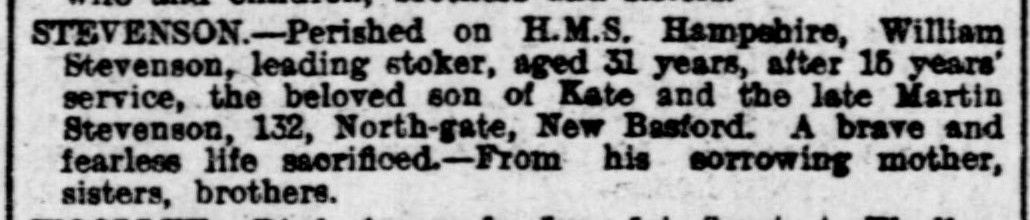
The loss of HMS Hampshire was of course widely reported in the newspapers and William's death was reported in the local ones. The image below is taken from the Nottingham Evening Post on 15th June 1916. Image © Reach PLC. Image created courtesy of THE BRITISH LIBRARY BOARD. Image reproduced with kind permission of The British Newspaper Archive (www.britishnewspaperarchive.co.uk)
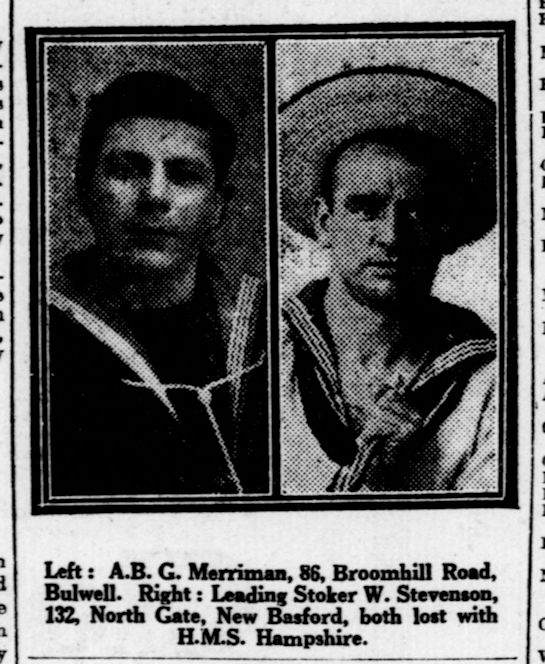
The image below is taken from the Nottingham Evening Post on 23rd June 1916. It shows William Stevenson (on the right) and Able Seaman G Merriman, another Nottinghamshire man who was also lost on the Hampshire. Image © Reach PLC. Image created courtesy of THE BRITISH LIBRARY BOARD. Image reproduced with kind permission of The British Newspaper Archive (www.britishnewspaperarchive.co.uk)
Like most of the sailors on the Hampshire, William's body was never recovered, so he has no actual gravestone. Instead, he is commemorated on the St Leodegarius Church War Memorial in Basford, the Portsmouth Naval Memorial for men lost at sea and also on the Kitchener Memorial in Orkney. 3 of William's brothers were also killed during the war, so his mother lost 4 of her 6 sons. The family also lost 2 of William's cousins; the Stevenson family paid a heavy price in WW1.
So far I've only been able to find the newspaper photo above of William. It would be lovely to add a better photograph of him. So if anyone has a photo of William Stevenson, please do get in touch. E-mail: n.rowberry@btinternet.com
In researching William's life, several sites have been invaluable, so I've included links to some of them here.
The Commonwealth War Graves Commission:

The National Archives at Kew:

The British Newspaper Archive:


If any of the above is of further interest, please feel free to contact me at: n.rowberry@btinternet.com
Nicky Rowberry 2025
Thank you for visiting my site. You are visitor number:
Peasants to Puddles - My Family History. By Nicky Rowberry